

Conditional Immunity, Real Impunity
Who Polices Federal Power When the System Won’t?

The Question Nobody Can Answer
If a federal agent commits a crime in your city, who arrests them?
It’s a simple question. It’s also one most Americans have never been forced to ask because we’ve been conditioned to assume the answer exists somewhere, handled quietly by someone else.
However, when that question is asked out loud, the answers get slippery fast.
States are told they can’t interfere with federal authority. Federal agencies insist their actions fall within official duties. Prosecutors defer. Courts delay. Investigations disappear into internal review. And the public is left with a system that insists accountability exists without ever showing where it lives.
That’s the tension Philadelphia District Attorney Larry Krasner stepped into when he warned that federal agents who commit crimes in his city would be arrested and prosecuted. His statement wasn’t radical. It wasn’t defiant. It was a challenge to a dangerous assumption that has quietly taken hold in American governance: That federal power, once asserted, no longer needs friction.
The truth is more unsettling. Federal agents are not legally immune from state law. However, the system increasingly allows them to behave as if they are, and that gap between law and practice is where accountability goes to die.
Want to Know Your Rights?
Download a free digital copy of the U.S. Constitution, the same document Trump is trying to bulldoze. Learn exactly what he’s breaking, and how to fight back.
100,000+ strong — and counting.
This winter, become a paid subscriber for just $1 a week and help us keep the truth alive.
Join The Coffman Chronicle — $1/Week
Why This Question Suddenly Matters
The question of whether a state can prosecute a federal agent is not new. What is new is how often it’s being asked and how rarely it’s being answered in public.
For decades, the mechanics of federal authority operated mostly in the background. Federal agents enforced federal law. State prosecutors enforced state law. Conflicts were rare, technical, and usually resolved quietly through courts or internal channels. Most people never had reason to think about where one authority ended and the other began.
That assumption no longer holds.
The Moment Federal Power Became Local Again
Aggressive federal enforcement actions, particularly in immigration, have pushed federal officers into deeper, more visible contact with local communities. Those encounters are no longer abstract policy debates. They involve guns drawn, doors broken, people detained, and in some cases, people killed. When those actions raise legal questions, the public naturally turns to the most familiar form of accountability: local law enforcement and local prosecutors.
That’s where the system starts to wobble.
When Philadelphia District Attorney Larry Krasner warned that federal agents who commit crimes in his city would be arrested and charged, the statement ricocheted far beyond Pennsylvania. Supporters heard a prosecutor asserting basic accountability. Critics heard a local official challenging federal authority. Legal commentators rushed to argue about jurisdiction, immunity, and constitutional limits.
Why Accountability Now Feels Like Interference
The intensity of the reaction revealed something more important than the legal debate itself.
It revealed how fragile the public’s understanding of oversight has become.
If a state prosecutor even suggests the possibility of charging a federal agent, it triggers national backlash, confusion, and threats of federal intervention, which tells us the system has drifted far from a shared understanding of accountability. The controversy wasn’t about whether a crime had occurred. It wasn’t about evidence. It was about whether the question should be asked at all.
That’s the red flag.
In a functioning system, asking who enforces the law when federal officers break it should not be controversial. It should be procedural, routine, and even boring. Instead, it now feels destabilizing, as if accountability itself is being treated as interference.
This is not happening in a vacuum. It’s happening at a moment when federal agencies increasingly rely on internal review, classified procedures, and jurisdictional shields to resolve misconduct claims. It’s happening as civil remedies narrow, qualified immunity expands, and criminal prosecutions of federal officers become rarer rather than more frequent. And it’s happening as communities most affected by federal enforcement are the least equipped to force answers through courts or Congress.
Krasner’s remarks didn’t create this tension. They exposed it.
They forced a question the system has quietly tried to avoid: not whether federal agents are powerful, but whether anyone outside the federal system still has the authority to check that power when it goes too far.
The Myth of Federal Immunity
One reason this debate explodes every time it surfaces is that Americans have absorbed a powerful myth that federal agents are immune from state law.
They are not.
What the Constitution Actually Protects and What It Doesn’t
There is no clause in the Constitution that places federal officers above criminal accountability. There is no statute that grants them blanket protection from arrest or prosecution by a state. More importantly, there is no doctrine that says a federal badge erases state criminal law the moment an agent crosses a city line.
What does exist is something narrower, more conditional, and far easier to distort.
Under the Supremacy Clause of the Constitution, states cannot punish or interfere with lawful federal acts. That principle exists for a reason. Without it, states hostile to federal law could simply arrest federal officials to nullify enforcement. Civil rights enforcement in the Jim Crow South would have been impossible. Federal authority would collapse into fifty veto points.
Yet that protection was never designed to be personal immunity. It was designed to protect the legality of the act, not the actor's status.
In plain terms, a federal agent is protected only when doing something federal law actually allows them to do, and only to the extent necessary to do it.
Courts have long applied a simple test when this question arises. Was the agent acting under valid federal authority? And was the conduct necessary and proper to carry out that authority? If the answer to either question is no, the Supremacy Clause offers no shelter.
This is where the myth begins to unravel, because nothing about federal employment authorizes criminal behavior. Federal law does not permit assault, homicide, reckless endangerment, or unlawful use of force simply because an officer believes they are enforcing policy. If an agent’s conduct crosses into territory that state law defines as criminal — and that conduct is not justified by lawful federal necessity — the legal protection collapses.
That has always been the rule.
How a Narrow Legal Doctrine Became a Broad Assumption
What’s changed is how aggressively the boundary is defended before a court ever reaches the facts.
In modern practice, claims of federal protection are often asserted immediately and broadly. Federal agencies argue that actions fall within the “scope of employment.” Cases are removed to federal court. Jurisdictional fights replace factual inquiry. The question shifts from what happened to who gets to decide. Long before a jury hears evidence, accountability gets buried under procedure.
That procedural shield is what allows the myth of immunity to survive.
The public sees prosecutions fail to materialize and assumes immunity must exist. Officials repeat phrases like “federal authority” and “lawful duty” without ever explaining where those limits actually lie. Over time, the distinction between conditional protection and personal immunity erodes, until many people come to believe there is no line at all.
However, the line still exists. It’s just being avoided.
That avoidance matters because the legal system was never designed to rely on restraint alone. It was designed to rely on review, on courts weighing evidence, judging necessity, and deciding whether power was lawfully exercised or abused. When immunity claims are treated as untouchable instead of testable, that review never happens.
This is how a narrow constitutional protection slowly mutates into something far more dangerous: the assumption that federal power need not answer to anyone outside itself.
That assumption is not the law, but it is increasingly the reality.
Where Oversight Is Supposed to Live
When concerns arise about federal agents abusing their authority, defenders of the system are quick to insist that oversight already exists. In theory, they’re right. On paper, federal power is surrounded by multiple layers of accountability — criminal, civil, internal, and political.
The Oversight System Everyone Assumes Exists
The problem isn’t the absence of mechanisms. It’s how rarely they function when they’re needed most.
Start with the most obvious: criminal prosecution.
Federal agents who commit crimes can, in theory, be charged under federal law by the Department of Justice. Assault, homicide, and civil rights violations are all federal crimes. The DOJ has jurisdiction. The statutes exist. The authority is clear.
However, the DOJ also oversees the agencies whose agents would be prosecuted.
That structural conflict is unavoidable. Prosecuting federal officers requires one part of the federal government to indict another, often based on investigations conducted internally or in coordination with the same agencies involved. Even when wrongdoing is obvious, cases are filtered through layers of discretion, institutional loyalty, and political sensitivity. As a result, prosecutions are rare, slow, and frequently declined without public explanation.
So the first line of accountability depends on the federal government choosing to prosecute itself.
Why States Are Discouraged From Acting
Next comes state prosecution, the very idea that triggered backlash when it was raised out loud.
States have general criminal jurisdiction over acts committed within their borders. In theory, that includes crimes committed by federal officers when those acts fall outside lawful federal authority. This layer exists precisely because the federal government is not supposed to be the sole judge of its own conduct.
Yet in practice, this mechanism is often neutralized before it ever reaches a courtroom. Federal authorities invoke supremacy claims. Cases are removed to federal court. Jurisdictional disputes stall proceedings, and state prosecutors are warned — formally or informally — that pursuing charges may trigger federal intervention.
What’s presented as constitutional order often functions as deterrence.
Civil Remedies That Rarely Reach the People Harmed
Civil lawsuits are frequently cited as another safeguard. Victims of federal misconduct may sue for damages under federal civil rights theories or limited constitutional claims. These suits, however, face steep barriers, including narrow causes of action, aggressive defenses, and doctrines like qualified immunity that block accountability unless prior cases match the facts almost exactly.
For many victims, especially those without resources or legal support, civil remedies are theoretical at best.
When Institutions Investigate Themselves
Then there’s internal oversight.
Federal agencies maintain inspectors general, internal affairs units, and professional responsibility offices tasked with investigating misconduct. These bodies do sometimes uncover wrongdoing. However, they operate inside the same institutional ecosystem as the agents they investigate. Their findings are often confidential, and their recommendations are not binding. Disciplinary outcomes — if they occur — rarely satisfy public standards of accountability.
Internal review can identify problems. It cannot substitute for independent judgment.
Finally, there is congressional oversight. This includes hearings, reports, letters, and occasionally, legislation.
But Congress responds to political incentives, not individual cases. Oversight ebbs and flows with election cycles, partisan alignment, and media attention. For people harmed by federal enforcement, congressional review is distant, abstract, and rarely timely.
Taken together, these mechanisms form what appears to be a comprehensive oversight structure, but each layer depends on restraint, discretion, or political will — not obligation.
No single mechanism guarantees review. Each can be delayed. Each can be declined. Each can be deflected. When all of them hesitate at once, the system doesn’t correct itself. It simply absorbs the harm and moves on.
That’s the gap Krasner’s remarks fell into.
It is not a gap in theory, but a gap in enforcement, a space where accountability exists everywhere in principle, and almost nowhere in practice.
And once power learns it can pass through that space without consequence, it stops treating oversight as a boundary, and starts treating it as a suggestion.
How Conditional Protection Becomes Practical Impunity
The legal framework governing federal authority was never meant to operate on trust alone. Conditional protection exists so courts can evaluate whether power was lawfully exercised. However, when those conditions are rarely tested, protection ceases to be conditional and becomes functional impunity.
That transformation doesn’t happen through a single doctrine. It happens through a sequence of procedural moves that quietly prevent accountability from ever reaching the merits.
The Quiet Mechanics of Avoiding Accountability
It usually begins with language.
When allegations surface, federal agencies almost immediately frame the conduct as occurring “within the scope of official duties.” That phrase carries enormous weight. It shifts the conversation away from what happened and toward who has jurisdiction. The underlying facts — the use of force, the harm caused, the legality of the act — are pushed aside in favor of a threshold claim that the agent was simply doing their job.
Once that framing takes hold, the next step is removal.
Cases brought in state court are transferred to federal court under federal officer removal statutes. This is often presented as a neutral procedural safeguard, but its effect is profound. Removal delays proceedings, raises costs, and places the dispute in a forum more accustomed to deferring to federal authority. The case becomes less about accountability and more about institutional boundaries.
Even when removal is challenged, the process itself drains momentum. Witnesses wait. Evidence ages. Public attention fades.
Procedure as a Shield
Then comes the immunity argument — not always explicit, but ever-present.
Federal defendants argue that their actions were authorized, necessary, or taken in good faith to enforce federal law. Courts are asked to resolve these claims early, often before discovery is complete. Judges are encouraged to err on the side of caution, to avoid chilling federal enforcement, and to respect executive discretion.
Each of these considerations has a legal pedigree. Together, they create a powerful bias against letting cases proceed.
Meanwhile, the Department of Justice retains parallel discretion over federal prosecution. Even when a state case stalls, federal authorities are under no obligation to step in. Decisions not to prosecute are rarely explained. Internal reviews may conclude years later with administrative findings that carry no criminal consequence.
The result is a system where no single actor takes responsibility.
States hesitate, fearing federal preemption. Federal prosecutors decline, citing discretion. Courts defer, invoking the separation of powers. Each decision is defensible in isolation. Collectively, they produce a vacuum.
This is how conditional protection becomes practical impunity— not because the law authorizes it, but because procedure absorbs the threat before it reaches judgment.
Over time, this pattern reshapes behavior. When agents learn that oversight is unlikely, accountability becomes theoretical. When agencies learn that jurisdictional defenses succeed, they deploy them reflexively. And when harm occurs without consequence, the public is told to trust a system that never shows its work.
This is not an argument against federal law enforcement. It’s an argument against a structure that treats review as optional.
Power that is never forced to justify itself does not remain restrained. It expands into the space where consequences should live.
And once that expansion becomes normalized, reversing it requires more than policy tweaks. It requires confrontation, not with ideology, but with process.
Who Pays the Price When Oversight Fails
When oversight collapses, the damage doesn’t land evenly. It concentrates — predictably and repeatedly — on the people with the least power to demand answers.
Federal enforcement does not operate in a vacuum. It operates in neighborhoods, at doorsteps, in traffic stops, and in workplaces. And when accountability mechanisms fail, the harm doesn’t disappear into procedure. It stays behind with the people who were on the receiving end.
Oversight Failure Is Not Evenly Distributed
Nowhere is this more visible than in immigration enforcement.
Agencies like Immigration and Customs Enforcement function as a stress test for oversight because their work is deliberately insulated from local control. They operate under federal mandates, often in coordination with, but not accountable to, local authorities. When encounters escalate, the people involved are frequently non-citizens, mixed-status families, or communities already conditioned to distrust law enforcement.
That matters because accountability depends on friction.
A citizen wronged by local police has at least theoretical access to local prosecutors, local courts, local media, and local political pressure. A non-citizen targeted by federal enforcement has far fewer levers. Deportation can happen faster than investigation. Detention can outlast public attention. Fear can silence witnesses before facts are ever established.
When federal agents operate in that space with minimal external oversight, the imbalance becomes structural.
Silence Is Not Vindication
This is why internal review fails so catastrophically in these cases. An internal investigation conducted months or years later offers little to someone who has already been detained, deported, or buried. A DOJ declination memo does nothing for families who watched harm unfold in real time. Civil lawsuits, if they are even possible, move at a pace that assumes stability — legal status, financial resources, emotional bandwidth — conditions many affected communities simply do not have.
And so misconduct, when it occurs, rarely produces the kind of public reckoning that forces change.
Instead, it produces silence.
That silence is often misread as legitimacy. Officials point to the absence of prosecutions as proof that nothing went wrong. Agencies cite closed investigations as evidence of compliance. The public, lacking visibility into the process, is told to assume the system worked.
But silence is not vindication. It is often the product of fear, delay, and procedural exhaustion.
This is the quiet truth behind “lawful federal authority.” When oversight depends on the harmed party surviving long enough — legally, financially, and physically — to force review, power accrues upward, and consequences fall downward. The system doesn’t fail accidentally. It fails predictably, along lines of vulnerability.
That is why Krasner's question statement matters far beyond Philadelphia.
If state prosecutors are discouraged from even asking whether federal agents can be held criminally accountable, the communities most affected by federal enforcement lose one of the last remaining external checks on power, not because the law demands it, but because the system has trained itself to treat accountability as interference.
That’s not neutral governance. That’s a hierarchy of consequence.
It’s how abuse becomes normalized without ever being declared legal.
What Krasner Was Really Saying
Much of the backlash to Larry Krasner’s remarks relied on a convenient mischaracterization: that he was threatening federal authority or inviting states to override federal law.
That’s not what he said, and it’s not what the law would allow even if he wanted to.
Testing Authority Is Not Defying It
Krasner was not claiming supremacy over federal agencies. He was not declaring open season on federal officers. He was doing something far more modest and far more disruptive to the status quo.
He was insisting that claims of federal protection must be tested, not assumed.
That distinction matters.
When federal officials say a state “cannot” prosecute a federal agent, they are making a legal argument, not stating a fact. That argument has to be evaluated by a court. Evidence has to be weighed. The scope of authority has to be examined. Necessity has to be proven. None of that happens if prosecutors never file charges, or if states are deterred from acting before a judge ever sees the case.
Let the Courts Decide, or Let Power Decide Itself
Krasner’s statement reintroduced that missing step.
By saying we will arrest, we will charge, and we will let the courts decide, he was asserting the role states are supposed to play in the constitutional system, not as rivals to federal power, but as external reviewers when federal power is alleged to have crossed into criminal conduct.
That role is not radical. It is foundational.
The Constitution does not vest exclusive oversight of federal officers in the executive branch. It assumes tension. It assumes overlapping authority. It assumes that when power is exercised at the edges, it will be tested by institutions that do not answer to the same chain of command.
What made Krasner’s remarks sound extreme is not their content, but rather how rarely anyone in his position says them out loud anymore.
Over time, the system has drifted toward preemptive deference. Federal agencies assert authority. States step back. Courts are never asked to rule. The result is a self-reinforcing cycle where immunity is never declared but always presumed.
Krasner disrupted that cycle by refusing to accept the presumption.
He didn’t say federal agents are criminals. He said if they commit crimes, state law still exists.
He didn’t deny federal authority. He denied federal infallibility. That difference is everything.
Once states surrender even the possibility of testing federal conduct in court, oversight collapses into internal review and prosecutorial discretion, the very mechanisms that have already proven inadequate. Accountability becomes optional. Power becomes self-justifying, and the public is told to trust a process that never shows its work.
Krasner’s warning wasn’t about ICE. It wasn’t about immigration policy. It wasn’t even about Philadelphia.
It was about whether the constitutional promise of accountability still functions when the federal government is the accused.
The ferocity of the reaction to that question suggests the system knows how fragile the answer has become.
The Warning
Systems built on power do not fail when that power is abused. They fail when abuse stops triggering consequences.
That is the quiet danger embedded in the current federal oversight structure, not that federal agents are legally immune, but that accountability has become so conditional, so delayed, and so internally managed that it rarely materializes when it matters most.
What Happens When Accountability Becomes Optional
A system that relies on restraint instead of review will eventually stop restraining itself.
Federal authority was never meant to operate without friction. The Constitution assumes conflict between institutions precisely because conflict forces justification. Courts exist to weigh claims. Prosecutors exist to test evidence. States exist to prevent power from collapsing inward on itself. When those checks are treated as interference rather than function, the design breaks.
What replaces it is not order, but insulation— insulation from local scrutiny, from timely consequences, and from the people most affected by enforcement decisions.
And once power becomes insulated, it stops explaining itself.
That’s why the question at the center of this debate matters more than any individual case or official statement. If a federal agent commits a crime in your city, who arrests them? is not a challenge to federal authority. It is a test of whether authority still answers to law rather than convenience.
When the answer becomes “only the federal government can decide,” oversight ceases to be oversight. It becomes permission.
Larry Krasner did not invent this tension. He exposed it. He reminded the system that constitutional accountability does not depend on goodwill. It depends on institutions willing to act, even when doing so is uncomfortable.
Because history is clear on one point. Power that cannot be questioned does not remain restrained. It expands, normalizes its excesses, and learns to treat accountability as an inconvenience rather than a requirement.
The law has not changed. The Constitution has not been rewritten. What has changed is how often we allow the question to be asked, and how quickly we accept silence as an answer.
That silence is not stability. It is a warning.
Support Independent Media. Become a Paid Subscriber
If this piece made you stop and ask who actually holds power, that’s not an accident.
The Coffman Chronicle exists to ask the questions that don’t make it into daily coverage, and to keep asking them until the answers stop hiding behind procedure and silence. That kind of work doesn’t come from press releases, access, or corporate sponsorship. It comes from independence.
Becoming a paid subscriber isn’t about perks. It’s about keeping this work possible.
If you believe no badge should outrank the law and accountability should apply upward, not just downward, support independent media by becoming a paid subscriber.
Because silence isn’t stability, and accountability doesn’t happen on its own.
Sources:
“Explainer: Can States Prosecute Federal Officials?” State Democracy Project, University of Wisconsin Law School, July 17, 2025.
“Supremacy Clause Immunity for Federal Officers and Agents in State Criminal Prosecutions,” PORAC Legal Defense Fund, October 13, 2013.
“What Kind of Immunity? Federal Officers, State Criminal Liability,” Yale Law Journal 112 (2003).
“Liability of a Federal Officer under State Law.” Louisiana State University Law Center.
“Federal Preemption & State Authority on Aliens.” Congressional Research Service Report R48525, May 6, 2025. Congress.gov.
“United States v. Washington (2022).” Wikipedia.
Philadelphia District Attorney Larry Krasner’ Warning that Federal Agents Would Be Arrested in Philadelphia. Instagram.
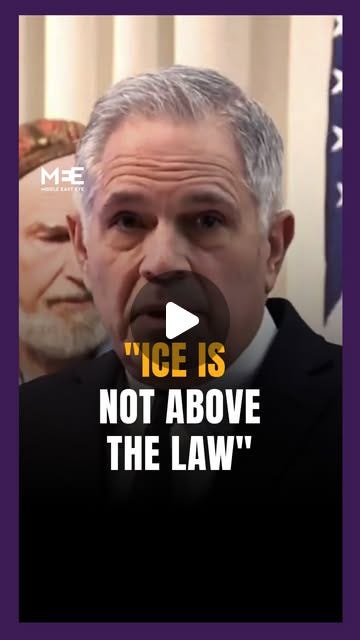
Krasner Stresses Presidential Pardons Don’t Protect Federal Agents from State Charges. Instagram.
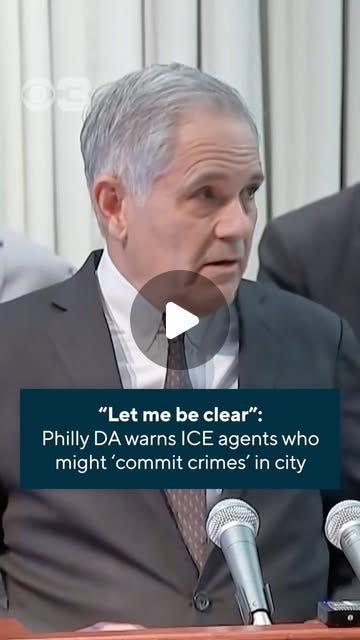
“Krasner, councilmembers, slam ICE and Trump over Minneapolis shooting; state prosecution warnings.” BillyPenn, January 8, 2026.
“US protests condemn ICE killing of Renee Good and ‘a regime that is willing to kill its own citizens.’” The Guardian, January 11, 2026.
I believe any form of immunity is WRONG AND DANGEROUS in any System. The law should be the same for everyone beyond their status, role or political party - including THE POTUS - especially THE POTUS !!!! "The higher the status of a person is the more immunity he/she has" is immoral, evil and dangerous.
If the IRS and credit rating companies can investigate any private citizen's bank accounts, tax situation, etc., then why can't private citizens enquire about federal accounts, tax situations and misdoings ??? Is it simply because private citizens DO NOT directly administer a political party, but subdue to it ???!
The only solution is for private citizens, being also legal voters, to form Constituent Assemblies in every county and state in order to curb unlawful federal actions like biased detention, deportation and lethal shootings of legal citizens.
...the laws are the law, jurisdiction is as defined, accountability is tied to the law...if a president can be charged, impeached, removed from office, a fed agency employee can be held accountable to state authority & fed response at that point limited to supporting the defense...balance of power concept should allow states to prosecute violations of state law...